Wat Svay — A Quiet Pagoda on the River in Siem Reap
South of the main roundabout on the right bank of the Siem Reap River sits Wat Svay — officially known as Sovan Phalla Riengsey Pagoda. It is one of the first pagodas you encounter heading toward Tonle Sap Lake, and one of the oldest active temples in the city. The original premises were constructed in 1853, making it well over a century and a half old, with the main vihara added in 1925.
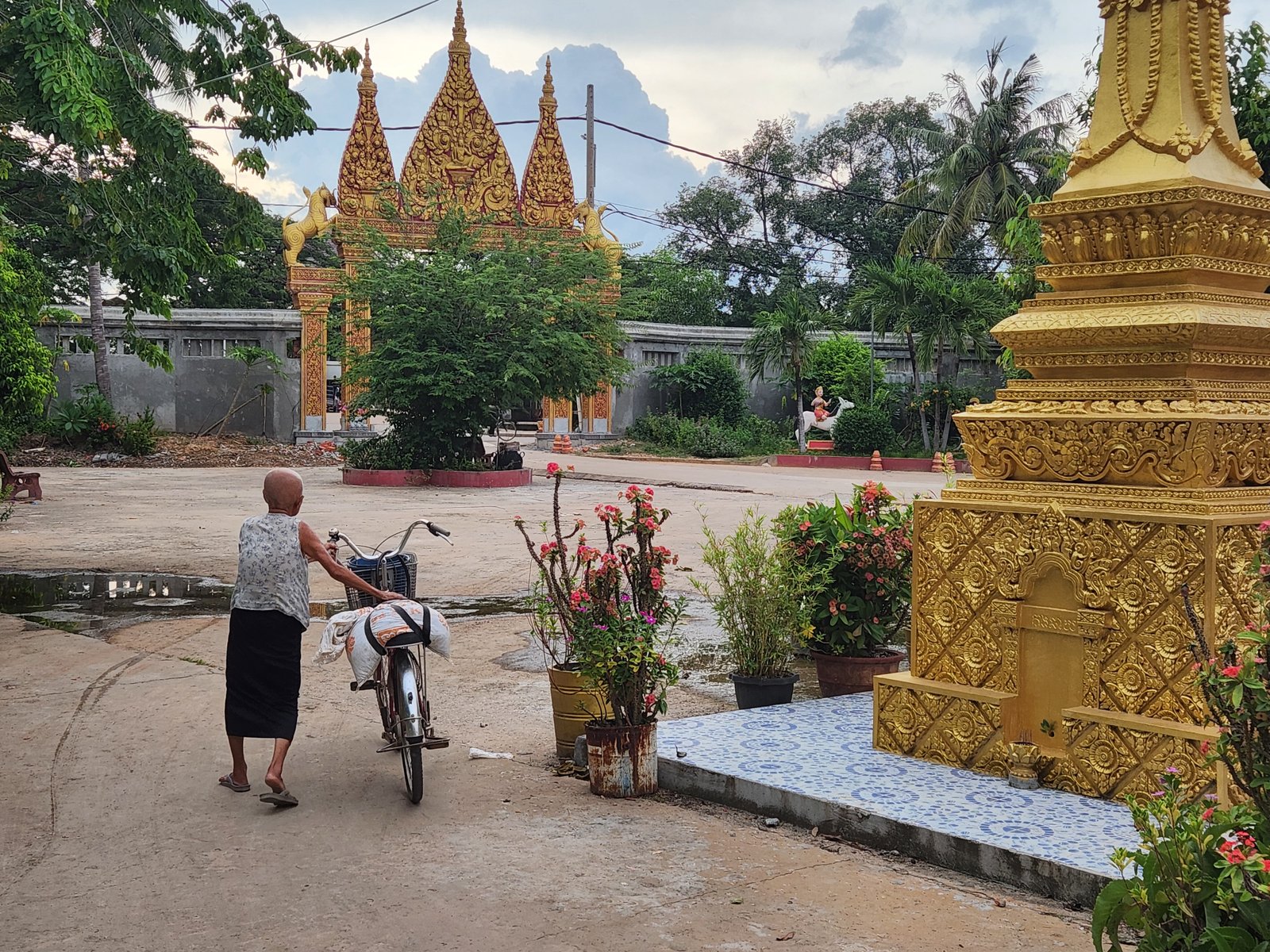
The entrance gate alone is worth the stop. A detailed stone arch depicts Vishnu riding a garuda — one of those distinctly Cambodian moments where Hindu and Buddhist traditions meet in a single piece of stonework. This kind of syncretism runs deep in Khmer religious architecture, reaching all the way back to the Angkor era when both traditions coexisted within the same temple complexes. Inside, the temple is one of the few in Siem Reap with decorated pillars and three tiers of wall paintings illustrating Jataka tales and scenes from the life of the Buddha. The pagoda’s head monk oversaw a renovation in 1960, but the Khmer Rouge years and subsequent looting took their toll on the structure.
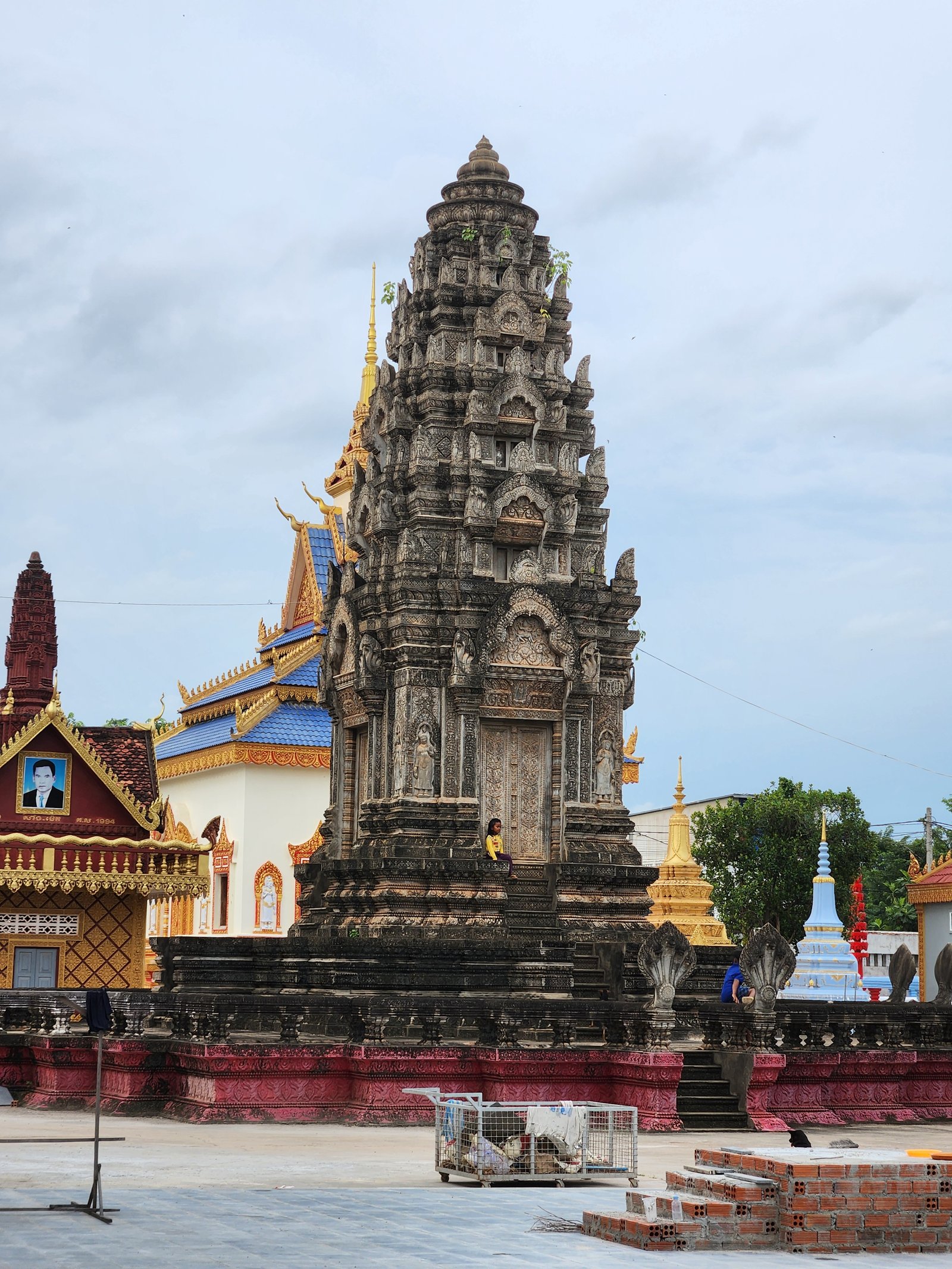
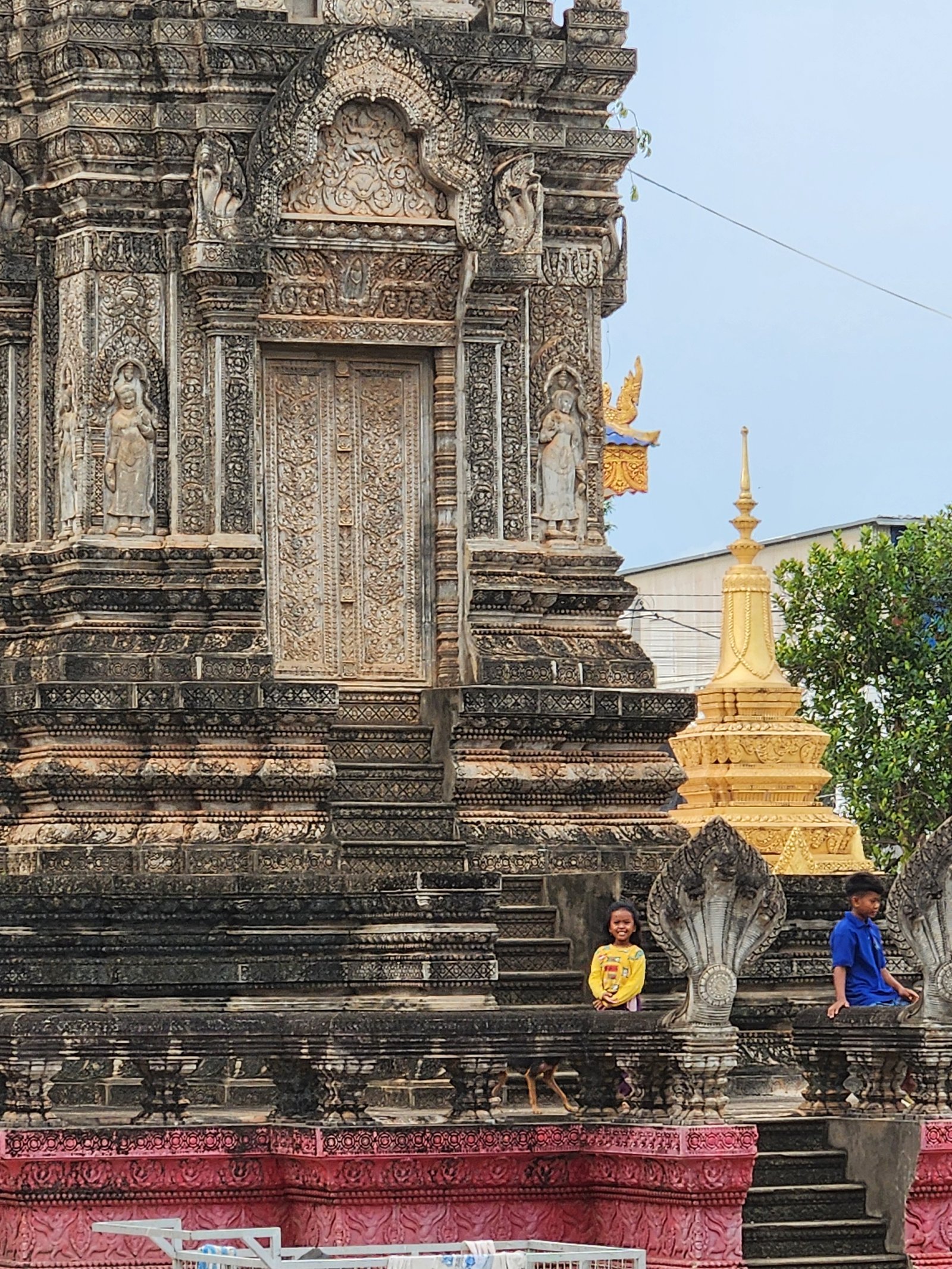
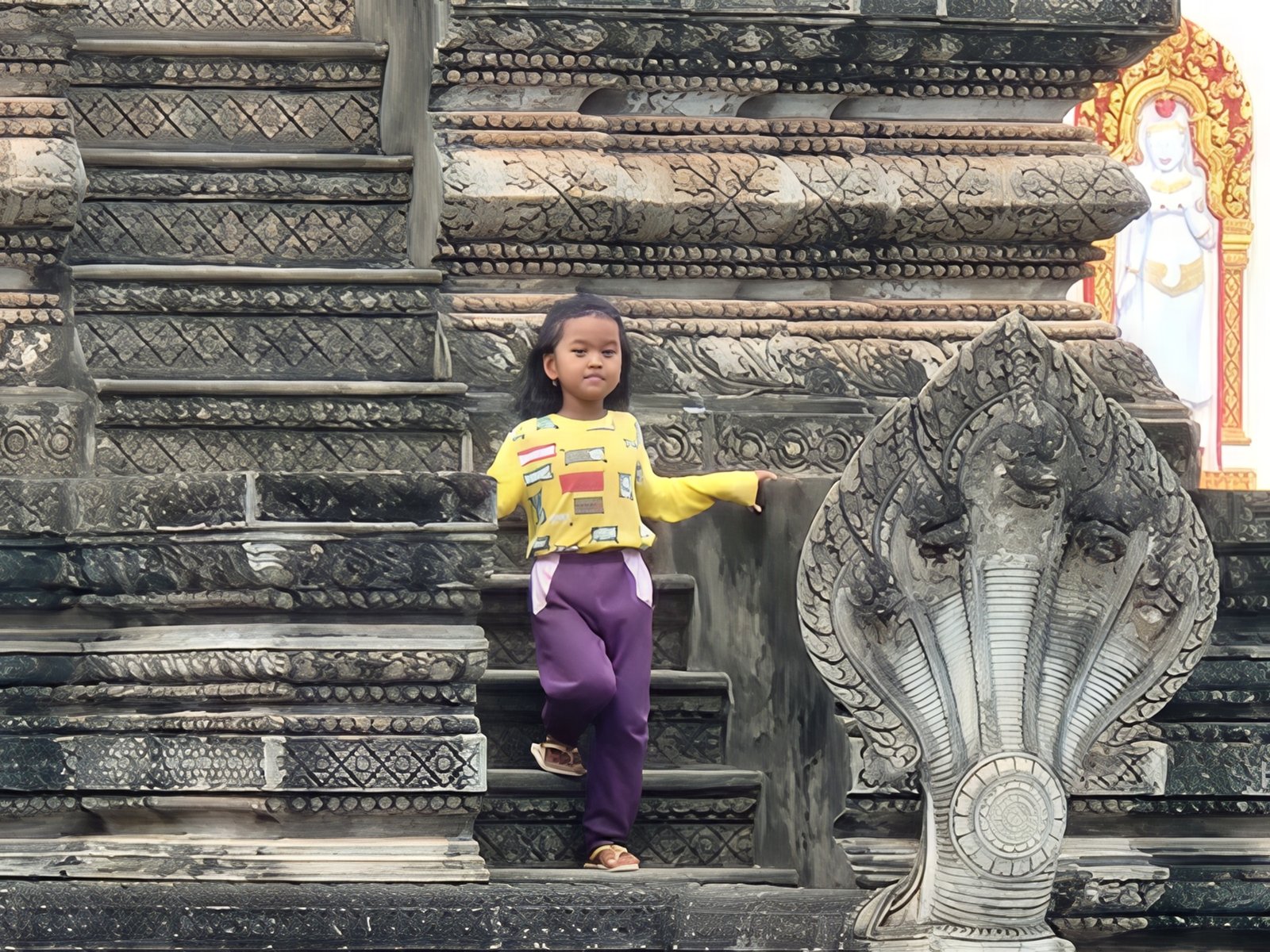
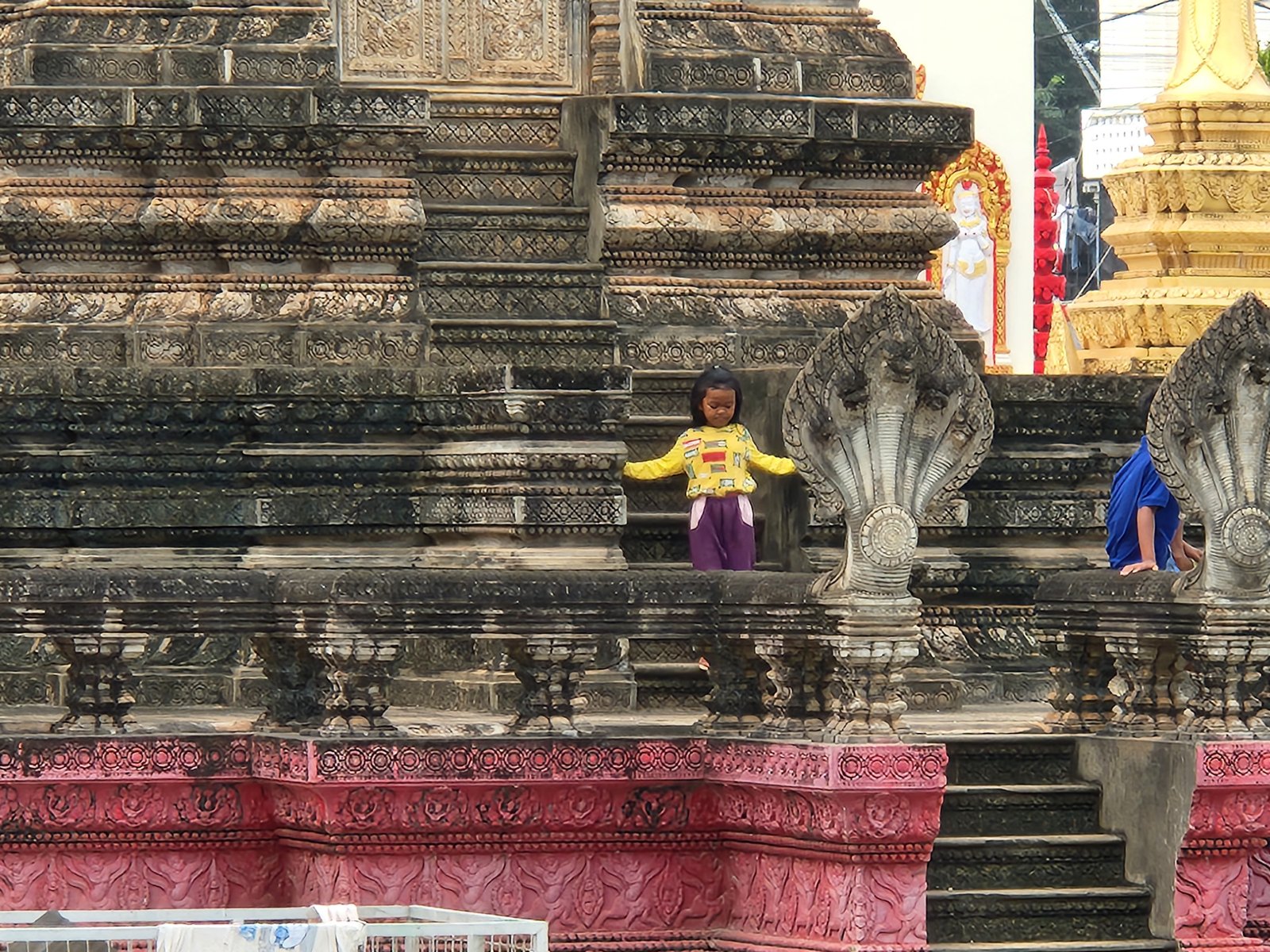
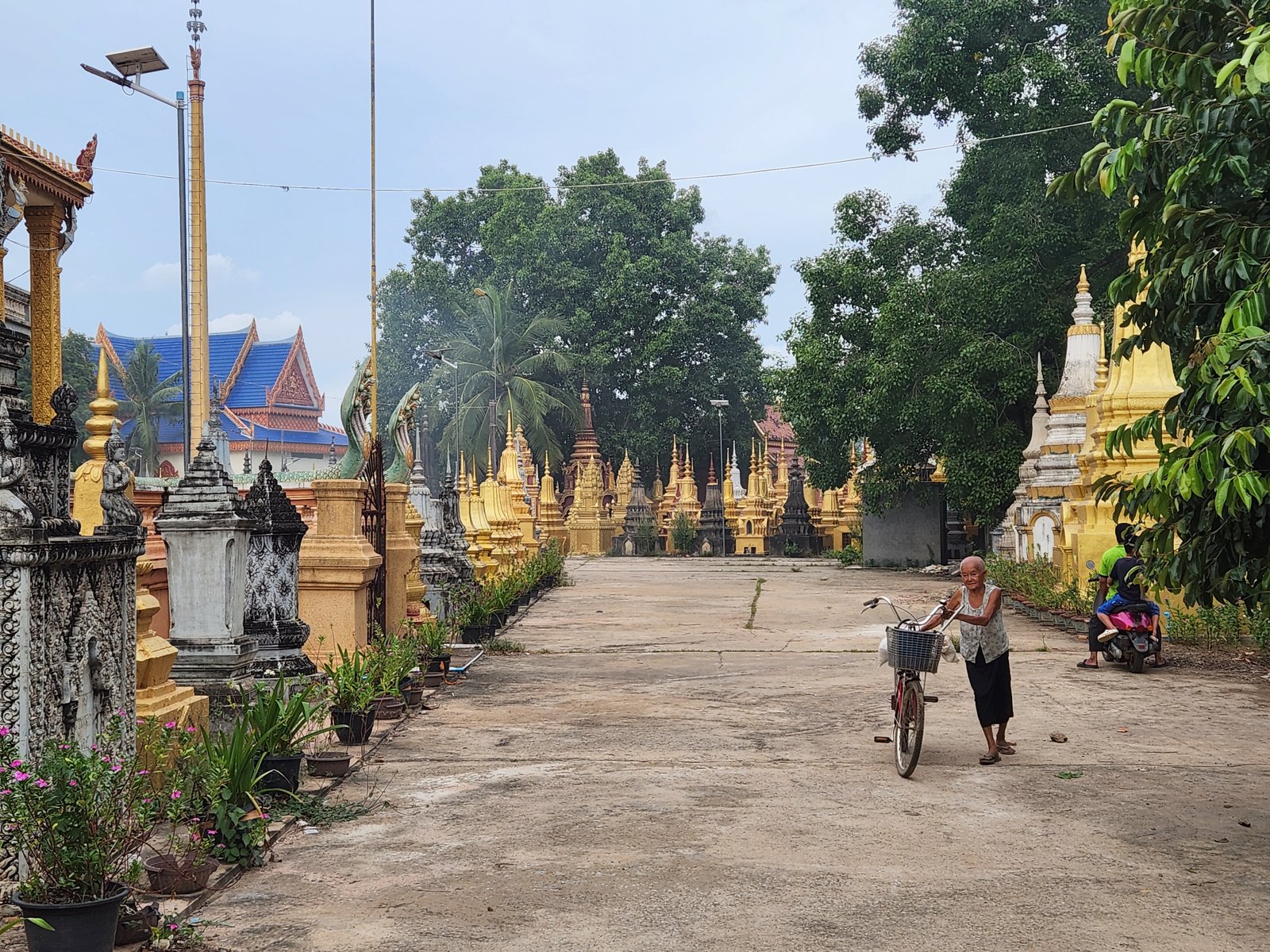
Outside, the grounds feel like a quiet world away from the tourist traffic along Pub Street and the temple circuit. Stone stupas rise from the grass. Naga serpent balustrades line the stairways — the multi-headed serpent kings that guard the entrance to sacred spaces all across Cambodia. In the photos here, you can see children treating them as playground equipment, which feels exactly right for a neighborhood pagoda that has been part of daily life in this part of Siem Reap for generations.
This was a late afternoon visit, golden light filtering through the temple grounds, monks going about their evening routines. An older woman walking her bicycle through a field of golden stupas. A young girl climbing the naga stairway as if it were the most natural thing in the world. The kind of place you stumble onto while exploring the river road south of town and end up staying longer than planned.